

The double crochet stitch is another essential technique to all types of crochet stitches. Certainly, it is one of the most common stitches performed.
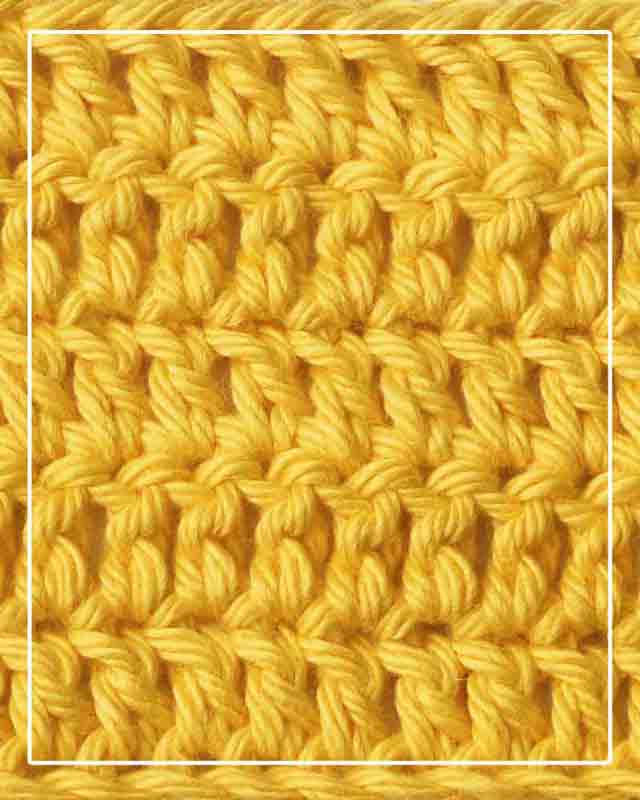
The double crochet (abbreviated dc) is one of the most common crochet stitches and is about twice as tall as a single crochet. As a result, a double-crochet fabric is fairly solid but not stiff and is great for just about any project.
How to Double Crochet:
The first 15 chain stitches make your foundation chain; the last 3 make your turning chain.
2. Yarn over the hook (yo) and insert your hook between the 2 front loops and under the back bump loop of the fourth chain from the hook.
Remember to yarn over from back to front.
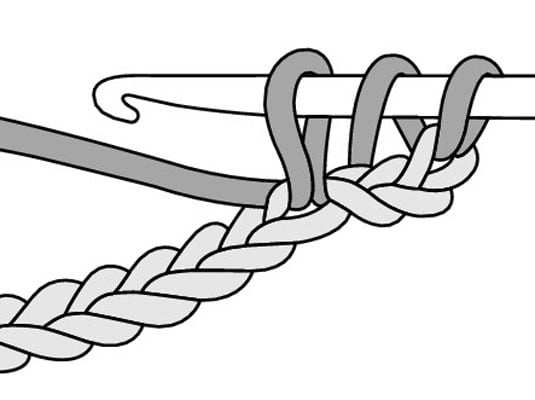
3. Yarn over the hook and gently pull the wrapped hook through the center of the chain stitch, carrying the wrapped yarn through the stitch.
Now, you should have 3 loops on your hook.
4. Yarn over the hook and draw your yarn through the first 2 loops on your hook.
This step begins your double crochet (dc) stitch.
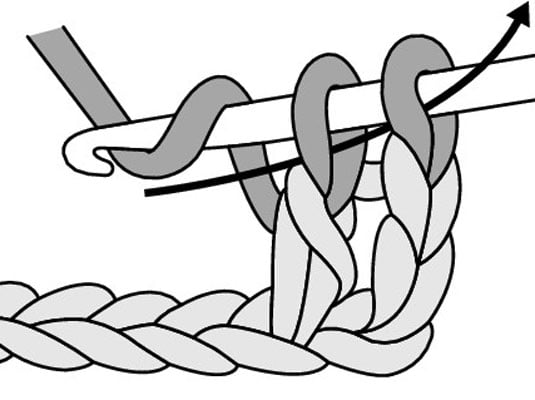
5. Yarn over the hook and draw your yarn through the last 2 loops on the hook.
One double crochet (dc) stitch is complete. You should have one loop remaining on your hook.
You should have 16 double crochet stitches in Row 1 (counting the turning chain as the first double crochet).
7. Turn your work so that the back side is facing you.
Turning your work allows you to start on Row 2.
8. Chain 3 (ch 3), then yarn over the hook (yo).
You chain 3 stitches for the turning chain.
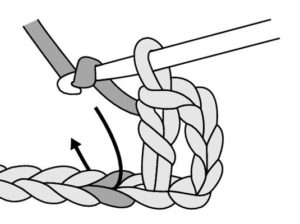
9. Skipping the first stitch of the row directly below the turning chain, insert your hook into the next stitch.
Don’t insert your hook in the wrong place.
10. Repeat Steps 3 though 5 for each of the next 14 double crochet (dc) stitches.
Be sure to yarn over before inserting your hook in each stitch.
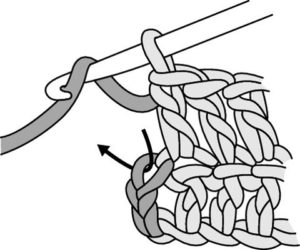
11. Work 1 double crochet in the top chain of the previous row’s turning chain.
You should have 16 double crochet stitches in Row 2 (counting the turning chain as 1 double crochet). Repeat these steps for each additional row of double crochet. Continue until you feel comfortable working this stitch.
Note: Don’t work a stitch into the first stitch of the row after the turning chain. This will produce an extra stitch, and if you continue to add a stitch in each row, your design get wider as it gets longer. Be sure to count your stitches frequently to make sure that you haven’t inadvertently gained (or lost) any stitches along the way.
Tip: Sometimes, especially when you’re working with bulky yarn or a larger than usual hook, the turning chain on a double crochet row leaves a gap at the beginning of the row. To get a neater edge, try chaining 2 instead of 3 stitches for the turning chain.
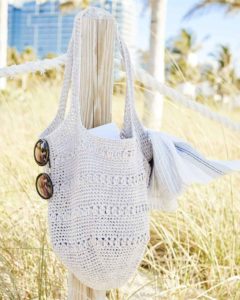
The Easy Market Bag Pattern uses the Single and Double Crochet stitch.
Thanks to New Stitch in a Day for the video.